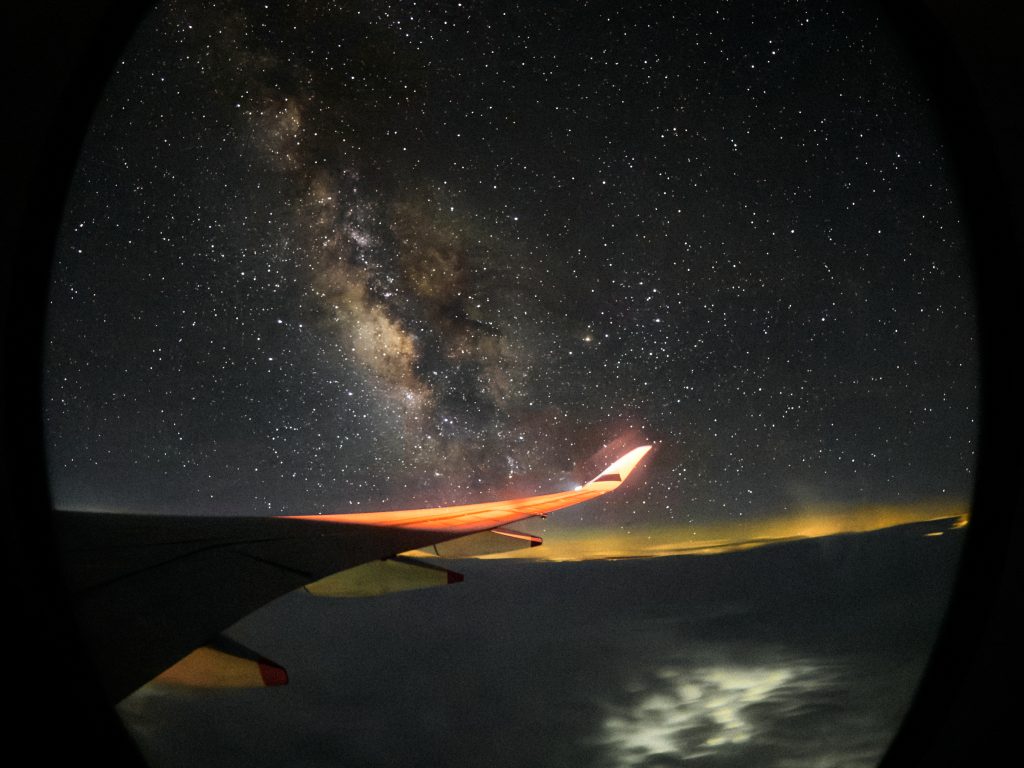
OM System OM-1 Mark II, OM System 8 mm f/1.8 Fisheye Pro.
ISO 25600, 2 seconds, f/1.8.
In September 2024, whilst on an Asiana Airlines flight to South Korea, I shot the Milky Way from a plane. This was my first time trying to shoot the galactic core, let alone from a plane. It took me a while to work out how to do it — I documented my planning process in my blog post Photographing the Milky Way from 35,000 ft I was excited to have captured something which resembled the galactic core next to the wingtip of the A350. It is not the best photo of the Milky Way by any stretch of the imagination, but then not every photo has to be print perfect or technically perfect. Sometimes, simply being able to capture something of an exciting moment all that is needed.

Leica Q3.
ISO 25000, 1 second, f/1.7.
I had booked a flight to Taiwan at the end of April 2026. It was scheduled to leave London at 21.10 with China Airlines. May to August is peak Milky Way season in the Northern Hemisphere, so I was hopeful for another shot of the Milky Way from a plane. Having had the experience of shooting the Milky Way and the aurora, I tweaked my methodology a little for this attempt.
Preventing reflections in the window
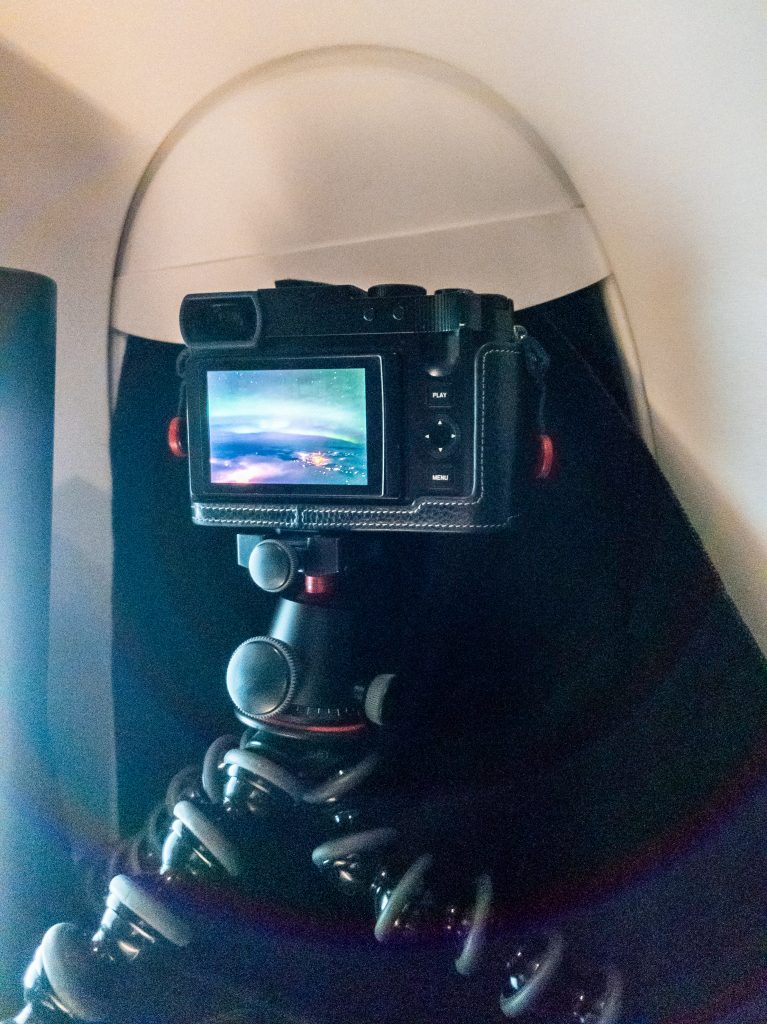
During my September 2024 attempt with Asiana Airlines, I used a dark trench coat as a tent to hide under. Pressed up against the window, it blocked out any ambient lighting from the rest of the cabin. Flying over Iceland in December 2025, I tried a new, less clumsy method. I used 3 Legged Thing’s Magic Wraps (affiliate link), securing the wrap around the lens, and then slotting it under the window blind. The Magic Wraps are self adhesive wrapping cloths. The inside of the cloth sticks to the outside of the cloth like Velcro, but without the noise when you separate the two sides. I know my description is pretty poor, but hopefully you know what I mean.
Camera shake
I sat in business class for the flight where I shot the aurora over Iceland. This gave me a ledge under the window to place a tripod. With a tripod, my own shaking hands were out of the equation. My China Airlines flight was in economy, so like in September 2024, I had to brace myself against the window to try and negate the camera shake from my own hands. Since my last shot of the Milky Way from a plane, I had switched over to OM System. This meant I had the amazing IBIS of the OM-1 Mark II, rated at 8.5 stops. I had successfully hand-held a pin-sharp landscape shot for 2 seconds before. 4 seconds was too much even for the OM-1 Mark II’s industry-leading IBIS. So 2 seconds was my go-to shutter speed for this attempt.
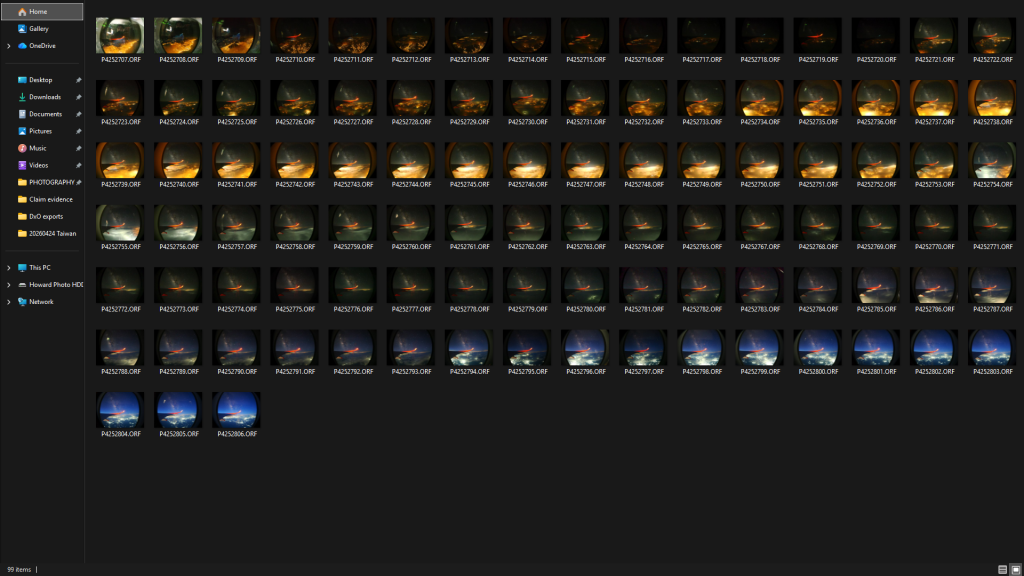
I did not review my shots due to the limited shooting window of around 30 minutes — I just kept snapping. After 99 attempts, I came away with only one shot of the Milky Way that I was happy with. Most of them were sharp, but a lot of them had varying degrees of artefacts from the dirty window, or a little bit of reflections on the window. A success rate of just over 1% — but so worth the effort.
High ISO noise
When I shot my Milky Way from the Asiana Airlines flight, my settings were ISO 25000, 1 second, f/1.7. It came out a tad dark, so I decided to expose for 2 seconds whilst keeping everything else roughly similar. My settings for the China Airlines Milky Way were ISO 25600, 2 seconds, f/1.8. The high ISO was a nightmare even for the Leica Q3 — a full frame camera. I did not know what to expect at ISO 25600 with a Micro Four Thirds sensor. When I opened the image on my laptop to edit — I still had 10 hours left of the flight — I just saw a noisy mess.
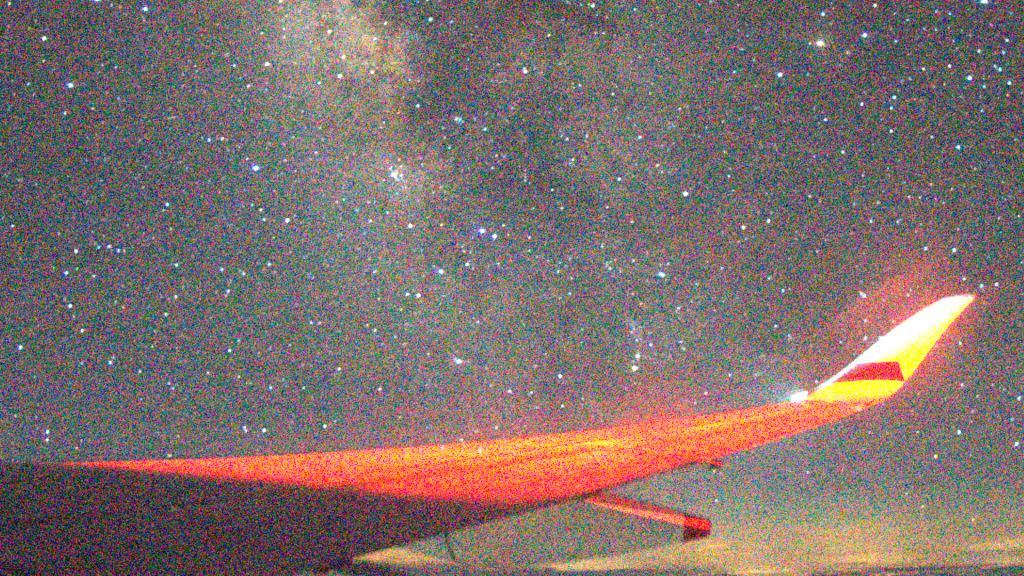
I was not too sure what to expect, but was pleasantly surprised at how DxO’s PhotoLab 9 cleaned up the image with DeepPRIME XD3. I was even more surprised at Capture One’s new enhanced denoise feature. My last blog post covered denoising this image in a bit more detail.
Concluding thoughts
After doing a bit more editing, I ended up with the image which is the header image for this post. The galactic core rendered a lot clearer than the Leica Q3 attempt. I think this is for the better IBIS of the OM-1 Mark II. Shooting for 2 seconds instead of 1 second is a whole extra stop of light with my ISO and aperture being roughly similar. But this led me back to the question I asked myself my trip to Yellowknife: do I need full frame? Sure, full frame renders cleaner for low light / high ISO situations. But the smaller sensor of the Micro Four Thirds camera allows for better IBIS, not to mention 20 megapixels is a lot more forgiving than 60 megapixels. With the denoising tools of today, even shooting Micro Four Thirds at ISO 25600 can result in presentable shots.
Whether YOU as a photographer need full frame or not is down to your own personal workflow, what you like to shoot, and your priorities. But this project has once again shown ME that, as someone who travels a lot, that the OM System Micro Four Thirds kit I have is more than good enough for what I need, including torture tests at ISO 25600 flying over western Azerbaijan at 37,000 ft and 660 mph.